
The Complete Beginner’s Guide to Home Lighting in 2026

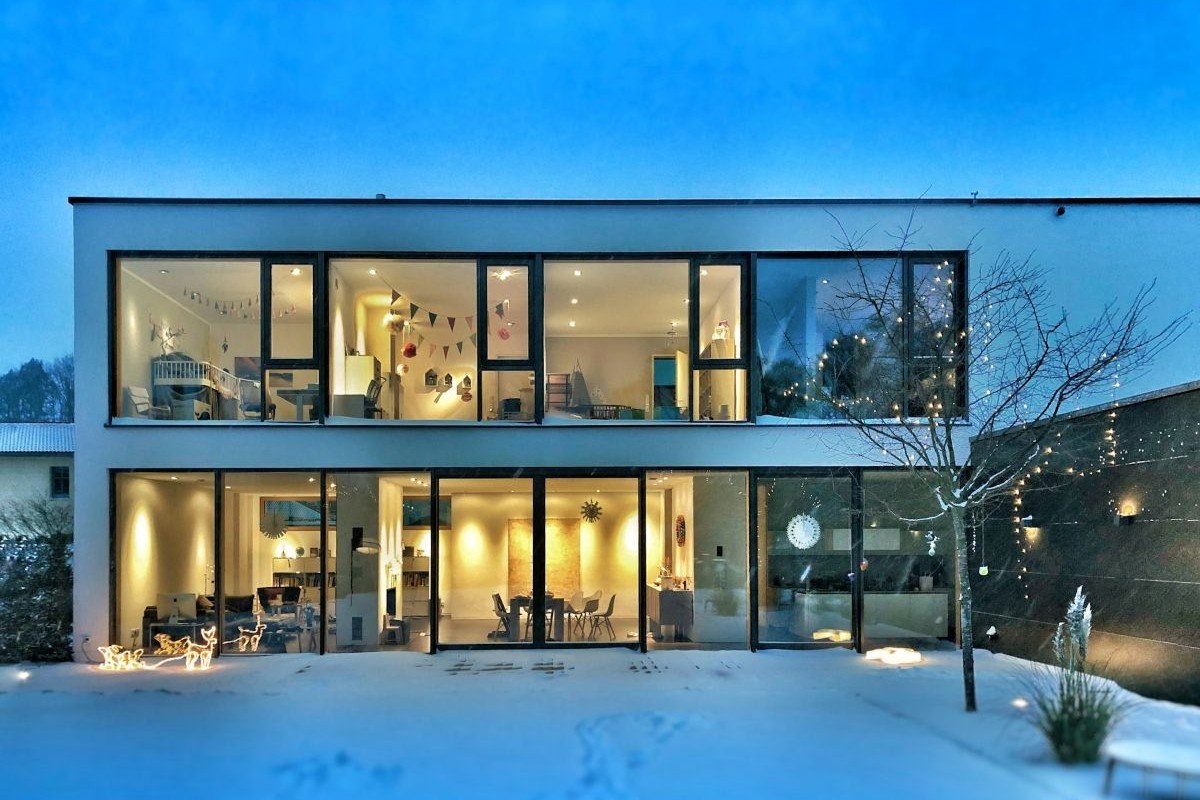
If you’ve ever walked into a beautifully lit room and felt instantly relaxed — or stepped into a harsh, fluorescent-lit space and wanted to leave immediately — you already understand the power of lighting. You just didn’t have the vocabulary for it yet.
The truth is, most homeowners treat lighting as an afterthought. They pick whatever fixture “fits the ceiling hole,” buy whichever bulb is on sale, and wonder why their home never quite feels the way they imagined it.
That stops today.
This Guide to Home Lighting covers everything a beginner needs to know about home lighting in 2026 — from the basic concepts (lumens, Kelvin, CRI) to practical room-by-room advice, layering strategies, and smart lighting — written in plain English, no electrician required.
1. Why Lighting Matters More Than You Think
Lighting is not a finishing touch. It is the architecture of atmosphere.
The right lighting:
In 2026, professional designers treat lighting as something you plan alongside flooring and cabinetry — not something you bolt on at the end. Whether you’re renovating or simply unhappy with how your home feels at night, understanding lighting is one of the highest-ROI upgrades you can make.
2. The 3 Types of Light Every Home Needs
This is the single most important concept in home lighting. Every well-lit room uses three distinct layers working together:
Ambient Lighting (the base layer)
This is your main, general illumination — the light that fills the room so you can move around safely and comfortably. Think ceiling fixtures, recessed downlights, or flush mounts. Ambient light answers the question: “Can I see the whole room?”
Task Lighting (the functional layer)
Focused, brighter light for specific activities — reading, chopping vegetables, applying makeup, working at a desk. Table lamps, under-cabinet strips, pendant lights over a kitchen island, and vanity lights all count as task lighting. Task lighting answers: “Can I do this specific thing safely and without straining my eyes?”
Accent Lighting (the character layer)
Decorative light that adds depth, drama, and personality. Picture lights, LED strips behind furniture, spotlights on artwork, and candle-style wall sconces are all accent lighting. Accent lighting answers: “Does this room have soul?”
The golden rule: Most beginners rely entirely on ambient light and ignore the other two layers. The result is a flat, uninviting room that’s either too bright (harsh) or too dim (gloomy). The fix is always to add task and accent sources — not to make the overhead light brighter.
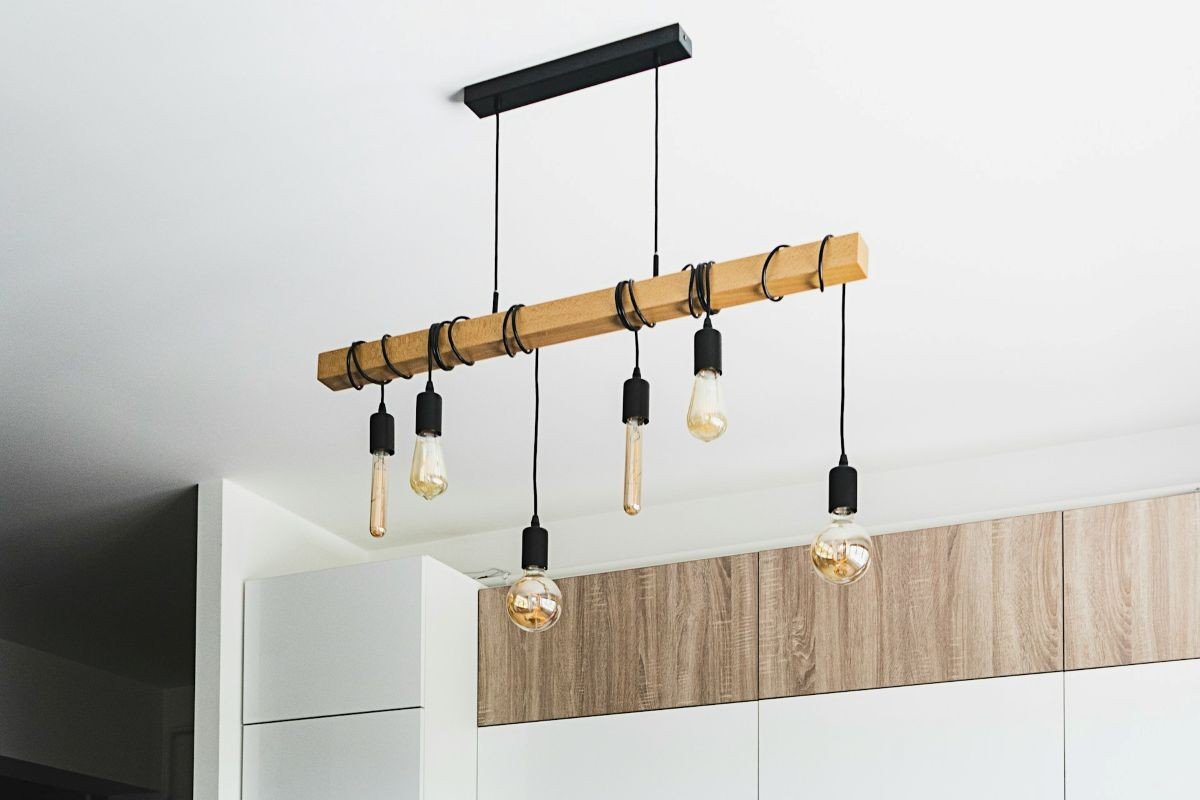
3. Understanding Lumens, Watts, Kelvin, and CRI
These four terms will make you a confident shopper. Here’s what they actually mean.
Lumens = Brightness
A lumen (lm) measures how much visible light a bulb actually produces. More lumens = more light. Simple.
Old incandescent bulbs were measured in watts, but watts only measure energy consumption — not brightness. With LEDs using far less power for the same output, lumens is the only number that matters for brightness.
Quick reference:
| Room Type | Recommended Lumens per m² |
|---|---|
| Bedroom | 100–150 lm/m² |
| Living room | 150–200 lm/m² |
| Kitchen (general) | 250–300 lm/m² |
| Kitchen (task/counter) | 500–700 lm/m² |
| Bathroom | 200–300 lm/m² |
| Home office | 300–400 lm/m² |
To calculate your room: multiply the lm/m² value by your room’s floor area. Then divide by the lumen output of your chosen bulb to find how many bulbs you need.
Watts = Energy Use (Not Brightness)
Watts tell you how much electricity a bulb consumes. For LEDs, low watts and high lumens is the goal. A modern 10W LED can produce the same light as an old 60W incandescent — using 83% less energy.
Kelvin = Color Temperature
Kelvin (K) describes the color tone of the light itself — from warm amber to cool blue-white. This is the single setting most responsible for how a room feels.
| Kelvin Range | Appearance | Best Used In |
|---|---|---|
| 1800–2700K | Very warm, amber glow | Bedrooms, living rooms, dining rooms |
| 2700–3000K | Warm white | Most living spaces, hallways |
| 3000–3500K | Neutral warm | Kitchens, bathrooms |
| 3500–4000K | Cool white | Home offices, utility rooms |
| 5000K+ | Daylight / blue-white | Garages, workshops only |
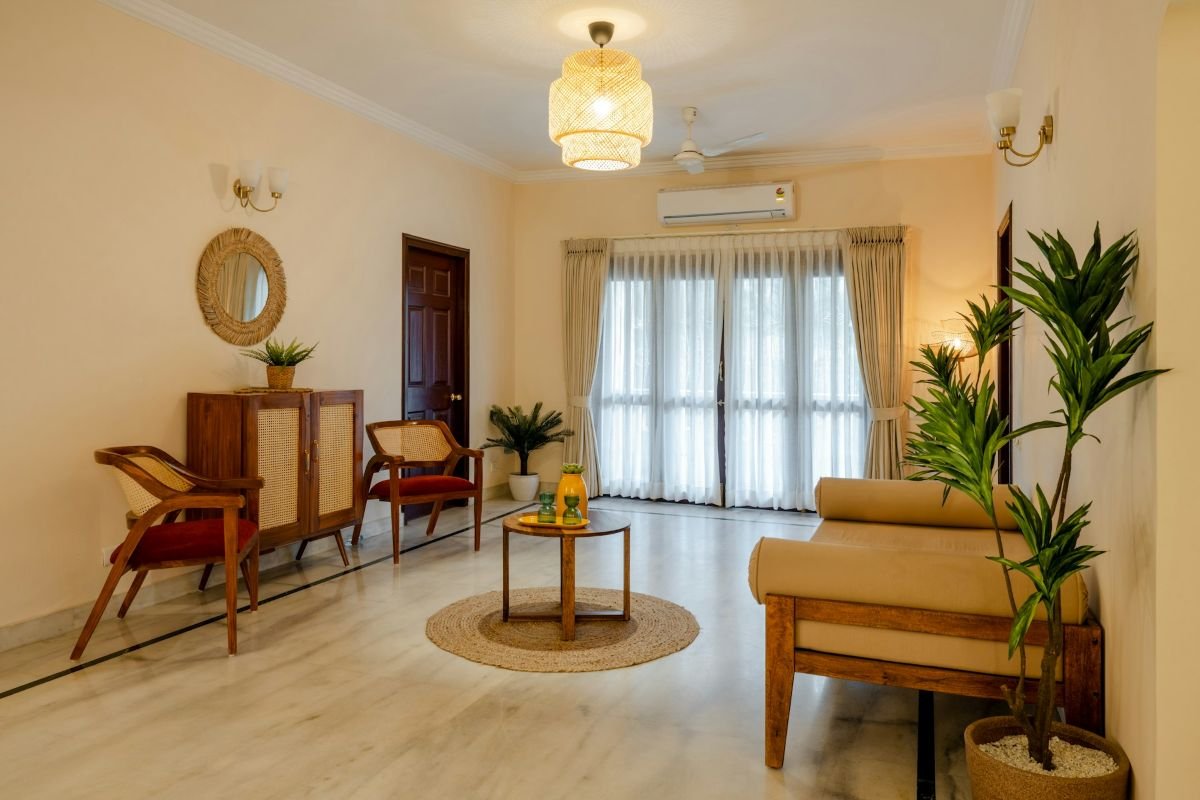
2026 trend: The industry-wide shift is firmly toward 2700K–3000K in residential spaces. Cool, blue-toned light is officially out of fashion in homes — and for good reason. Warm light is easier on the eyes, more flattering to skin tones and materials, and signals to your brain that it’s time to relax.
CRI = Color Rendering Index
CRI (rated 0–100) measures how accurately a light source reveals the true colors of objects compared to natural daylight (which scores 100).
Always look for CRI 90+ in living spaces, bedrooms, and anywhere you get dressed. It makes a noticeable difference that most people can’t identify but everyone can feel.
4. Room-by-Room Lighting Guide
Living Room
The most social room in your home needs the most flexibility.
Bedroom
Your bedroom is a sleep sanctuary. Every lighting decision should support rest.
Kitchen
The hardest room to light well, because it needs to serve multiple purposes: cooking, socialising, homework, late-night snacks.
Bathroom
Like the kitchen, bathrooms need layered light for different times of day.
Home Office
Productivity lighting is different from relaxation lighting.
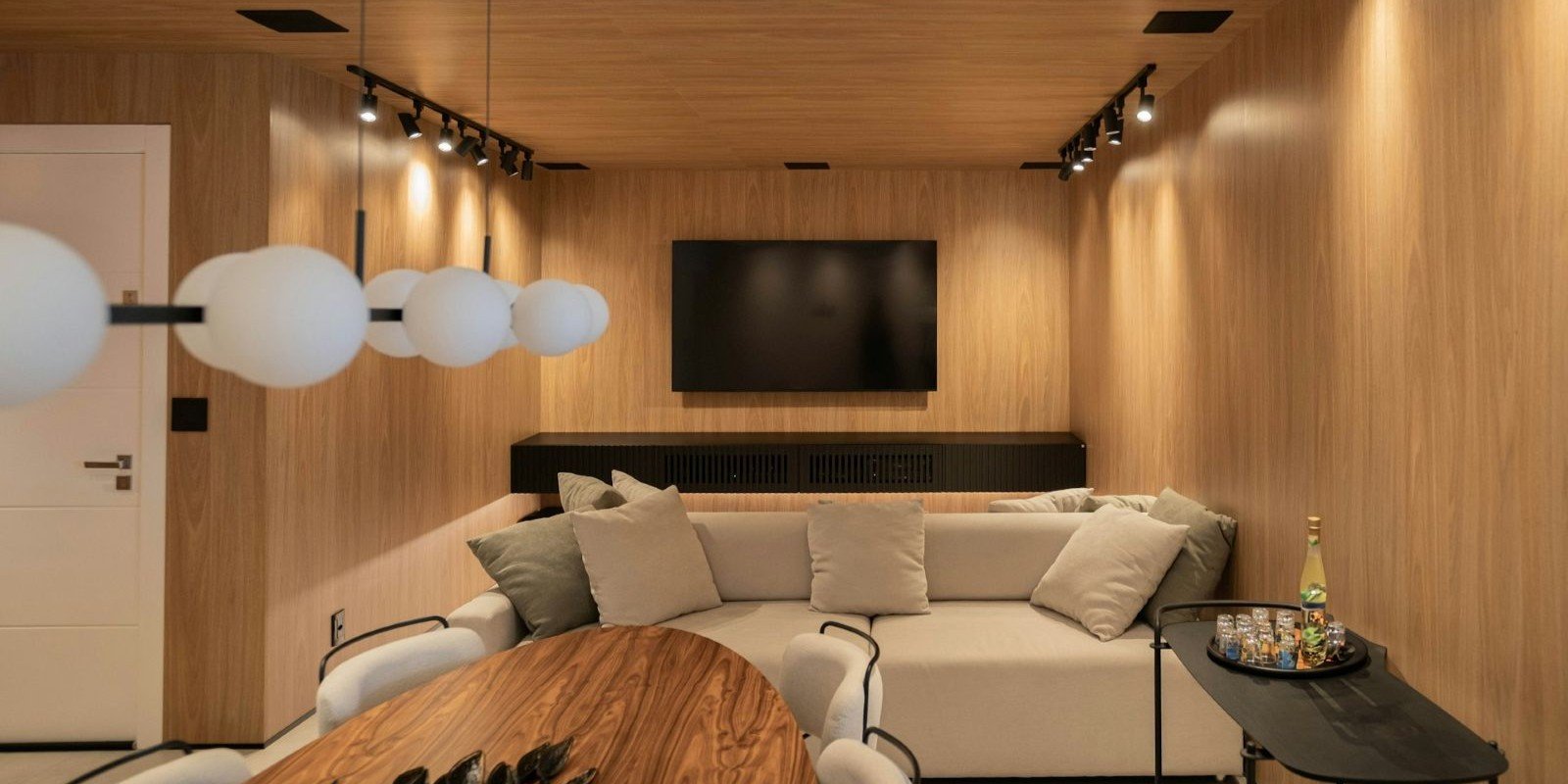
5. How to Layer Lighting Like a Designer
Knowing the three types of light is the theory. Here’s how to actually implement them.
Step 1: Start with your ceiling (ambient)
Install or assess your central light source. Is it dimmable? It should be. Can you control its color temperature? Even better. Set this as your room’s “base brightness” at about 60–70% capacity — not blasting.
Step 2: Add task light at functional zones
Identify where you actually do things in the room. Reading chair? Add a floor lamp. Desk? Add a task lamp. Kitchen counter? Add under-cabinet strips. Each task light should be independently switchable from the main ambient source.
Step 3: Drop in accent sources low and warm
Table lamps, wall sconces, and LED strips should always run warmer and dimmer than your ambient layer. They add depth by creating contrast — light and shadow is what makes a room feel three-dimensional.
Step 4: Install dimmers everywhere you can
A dimmer transforms any room instantly. It lets you match the brightness to your activity and time of day — bright for cooking, dim for dinner, very dim for winding down. In 2026, dimmer switches are inexpensive and widely available, and most LED bulbs are now dimmable.
Step 5: Test at night, not during the day
Natural light during the day masks how your artificial lighting actually performs. Evaluate your layering at 8pm with curtains closed to see the true result.
6. The 5 Biggest Beginner Lighting Mistakes
Mistake 1: Relying on a single overhead light
This is the most common error in every room. One ceiling fixture, regardless of how bright it is, produces flat, uninviting light with hard shadows. The fix is never a brighter bulb — it’s more sources at different heights.
Mistake 2: Buying the wrong Kelvin temperature
Cool white (4000K+) bulbs in bedrooms and living rooms are a recipe for a home that never feels cozy. Warm white (2700K–3000K) is almost always the right choice in residential spaces. When in doubt, go warmer — you can always add a cooler task light for specific activities.
Mistake 3: Ignoring CRI
Low-CRI bulbs make everything look slightly wrong — furniture looks cheaper, skin tones go grey, and paint colors shift. Spend a little more for CRI 90+ in rooms where you spend time. It’s one of the most underrated upgrades available.
Mistake 4: Not installing dimmers
A room with fixed-brightness lighting has only one mood. Dimmers give you infinite flexibility. They’re inexpensive, most LEDs support them, and they extend bulb life. There is almost no downside.
Mistake 5: Placing the bathroom mirror light overhead
An overhead mirror light creates dramatic downward shadows on your face — under your nose, chin, and eyes. Side-mounted vanity lights at eye level are always superior. If you only have an overhead light, a makeup mirror with built-in lights is the next best fix.
7. Your Next Steps
You don’t need to rewire your home or spend a fortune to transform how it feels. Here’s a practical order of operations:
Good lighting is not about following trends or spending a lot of money. It’s about understanding a handful of principles — layering, colour temperature, brightness, and flexibility — and applying them thoughtfully, one room at a time.
Start with one room. Change the bulbs. Add a lamp. Install a dimmer.
You’ll notice the difference the same evening.
Related posts


Leave a Reply
You must be logged in to post a comment.


One thought on “The Complete Beginner’s Guide to Home Lighting in 2026”